







How to Care for a Wool Overcoat: The Complete Guide
Updated October 2026. Written by The Platinum Tailor, a family tailoring business making wool overcoats since 2012.
Quick answer
Hang your wool overcoat on a wide wooden hanger. Brush it after wearing. Blot spills straight away and let mud dry before brushing it off. Dry clean it once or twice a season at most, never put it in the washing machine, and store it clean in a breathable cotton bag with cedar or lavender over summer. Do those things and a good wool coat will look right for many years.
A good wool overcoat will outlast almost everything else in your wardrobe, but only if you treat it properly. Most advice online is either wrong (no, you should not dry clean it after every wear) or overcomplicated. This is the version we would give a friend.
The care routine at a glance
| When | What to do |
|---|---|
| Every wear | Hang on a wide wooden hanger, one button done up. Brush downwards |
| When it happens | Blot spills, let mud dry then brush, air it if it gets damp |
| Every few weeks | Check for pilling at cuffs and under arms, remove with a fabric shaver |
| Once or twice a season | Specialist dry clean, if needed |
| End of winter | Clean, then store in a cotton bag with cedar or lavender |
1. Use the right hanger
This matters more than anything else. Wire hangers, the kind dry cleaners send coats home on, deform the shoulders within a season. Thin plastic ones do the same, just slower. Use a wide, ideally contoured, wooden hanger that supports the full width of the shoulders so the coat keeps its shape. A good hanger costs a few pounds and protects a coat that cost a lot more.
Hang it with at least one button done up so the front holds its shape, and give it space. A coat crammed against everything else will crease.
2. Brush it after wearing
Wool releases dirt and odour when it is aired, which is why a wool coat can be worn many times between cleans. It does need brushing. Use a soft clothes brush and brush downwards, with the nap, in long even strokes. That lifts dust, hair and lint before they work into the weave. Two minutes is enough. It also evens out the surface so the coat looks cleaner and sharper. Black coats show lint the most, so a brush is especially worth it.
3. Deal with marks straight away
- Dry marks (mud, dust, road salt): let it dry fully, then brush it out. Do not rub damp mud into the fibres.
- Wet spills (coffee, wine): blot with a clean white cloth. Press, lift, repeat with a fresh corner. Do not rub.
- Rain: hang the coat on its wooden hanger to dry naturally, away from radiators and heaters. On properly wet days, a water resistant trench coat saves your wool coat the soaking.
- Greasy marks: dab on a little talcum powder, leave overnight to absorb the oil, brush it off in the morning.
Never apply direct heat, use household stain removers, or put a structured wool coat in the washing machine, even on a wool cycle. The internal structure will be ruined long before the wool.
4. Dry clean sparingly
Once or twice a season is plenty. Dry cleaning solvents strip natural oils from wool and pressing flattens the cloth. Once a year refreshes a coat. Once a month ages it. If you commute in it daily through a wet winter, clean it at the end of the season before storing it. Use a cleaner who handles tailored garments and will hand press the lapels and shoulders.
5. Store it properly in summer
- Clean it first. Moths are drawn to food residue and skin oils as much as the wool itself.
- Use a breathable cotton garment bag. Plastic traps moisture and can cause mildew. If you only have plastic, leave the bottom open.
- Keep it cool, dry and dark, with cedar blocks or lavender sachets. Refresh them every couple of months.
- Hang it, never fold it. Fold lines in a long coat can become permanent.
Not sure when to put it away or bring it out? See when it is cold enough for a wool coat.
Pilling
Some pilling on a new wool coat is normal, especially under the arms, at the cuffs and where a bag strap rubs. It is loose fibre working its way out, and it usually settles after the first season. Remove pills with a small electric fabric shaver or a fabric comb. Do not pull them off by hand, as you will pull good fibres with them. Why blends pill differently is covered in what percentage wool a coat should be, and there is a full guide to removing bobbling from a wool coat.
Cashmere blends
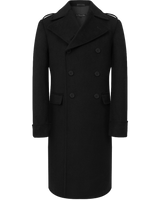
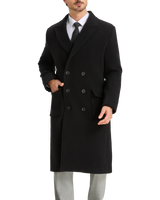
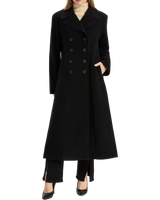
The same rules apply, just brush a little more gently, because cashmere fibres are finer. Our coats are 70% wool and 5% cashmere, so the cashmere mainly adds softness rather than fragility. Whether it is the Long Overcoat, the Greatcoat or the Women's Double Breasted Overcoat, treat it like any quality wool coat. More on the difference in wool vs cashmere overcoats.
Velvet collars
The velvet collar on a covert overcoat needs a softer touch. Brush gently in the direction of the pile with a soft brush, not the one you use on the body of the coat. If the pile gets crushed, steam it from a sensible distance and brush lightly while warm. Never iron velvet directly. More in the velvet collar overcoat.
Light coloured coats
Light coats show marks at the cuffs and collar sooner. Brush after every wear, sponge cuffs lightly with cool water between cleans, and watch for dye transfer from dark bag straps and raw denim.
The bigger picture
None of this is difficult or expensive: a good hanger, a brush, a garment bag and a few minutes every couple of weeks. We have seen expensive coats ruined in two seasons by wire hangers, washing machines and months folded in a suitcase. The fabric does not care what you paid. It cares how you treat it.
Frequently asked questions
How often should you dry clean a wool coat?
Once or twice a season at most, and often just once at the end of winter before storing it. Brushing and spot cleaning handle the rest.
Can you wash a wool overcoat in the washing machine?
No. Even on a wool cycle, a structured overcoat can shrink, felt and lose its internal shape. Spot clean and use a specialist dry cleaner.
How do you get pills off a wool coat?
Use a small electric fabric shaver or a fabric comb, working gently over the area. Do not pull pills off by hand.
How do you dry a wet wool coat?
Hang it on a broad wooden hanger at room temperature and let it dry naturally. Keep it away from radiators and heaters, which can shrink or distort wool.
How do you stop moths eating a wool coat?
Store it clean, in a breathable cotton bag, somewhere cool and dark, with cedar blocks or lavender. Check it occasionally through summer.
What hanger is best for an overcoat?
A wide, contoured wooden hanger that supports the full width of the shoulders. Avoid wire and thin plastic hangers.
Wool and cashmere overcoats for men and women from £139. Free tracked UK delivery, 30 day returns.
Browse All Overcoats →